

 Post by
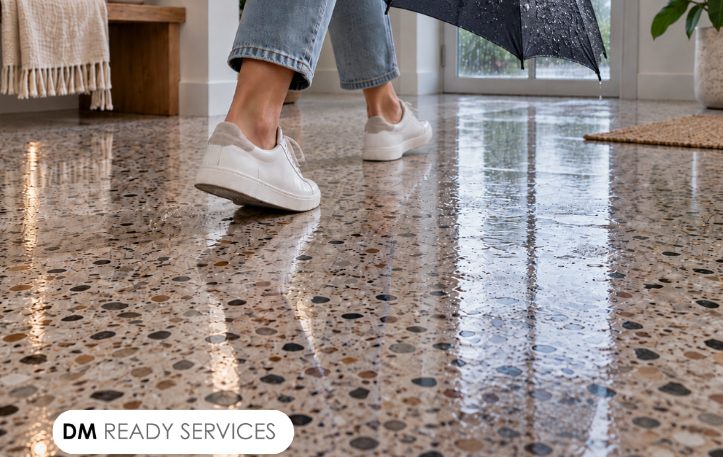
 Commercial property owners and managers must keep safety first for employees, clients, and customers. When picking new surfaces for high-traffic spaces, many ask: “Is terrazzo flooring slippery?”
Key Takeaways
- Not Naturally Slippery: Dry terrazzo meets or exceeds standard ADA and OSHA safety guidelines for floor traction.
- Sealers Add Traction: Professional sealers with anti-slip grit increase traction, even when the floor system gets wet.
- High Traffic Performance: An epoxy terrazzo floor handles heavy foot traffic while keeping its shine and safety profile.
- Proper Cleaning Helps: Using neutral cleaners stops slippery soap films from building up on commercial flooring.
- Restoration Restores Grip: Professional floor restoration fixes worn finishes and restores slip resistance to older floors.
Understanding Terrazzo and Slip Resistance
Facility managers often worry that a bright shine means a slick surface. In fact, a dry terrazzo floor offers strong slip resistance under normal walking conditions. The high shine comes from mechanical polishing with fine diamond pads, not from a slippery wax finish.
Industry standards measure floor grip using the Coefficient of Friction (COF). The Americans with Disabilities Act (ADA) recommends a static COF rating of 0.60 or higher for flat commercial walkways. When contractors install and finish a modern epoxy terrazzo floor, it easily passes this safety test. That means your business gets a clean look without risking safety for visitors or staff members.
What Makes a Floor System Slippery?
While terrazzo is safe when dry, certain factors can reduce traction in busy buildings. Knowing these factors helps property managers keep walking paths safe for everyone.
1. Water and Spills
Liquid spills lower friction on almost any smooth floor system. Rainwater or spilled drinks near entryways and restrooms can cause slick spots. Placing walk-off mats at entry doors helps trap water before people walk onto your terrazzo flooring.
2. Wrong Cleaning Products
Using cheap cleaning chemicals or greasy soaps leaves a thin film on polished stone. Over time, this film creates a slick layer. Always wash your terrazzo floor with a neutral pH soap made for natural stone and epoxy.
3. Worn Sealers
Over years of heavy foot traffic, top sealers can wear down in busy areas. Without protective sealers, the surface can lose its grip. Regular checks help you spot areas that need fresh sealer or quick touch-ups.
Comparing Commercial Flooring Traction
Choosing the right surface for commercial buildings means looking at safety, care, and long-term value.
| Flooring Type | Dry Traction Level | Wet Traction Level | Maintenance Needs | High Traffic Durability |
| Epoxy Terrazzo | High | Medium to High (with sealer) | Low | Excellent |
| Polished Concrete | High | Low to Medium | Low to Medium | Very Good |
| Ceramic Tile | High | Low (unless textured) | Medium | Good |
| Vinyl Composition Tile (VCT) | Medium | Low | High (requires waxing) | Fair |
Safety Solutions and Anti Slip Additives
If your business handles frequent moisture or heavy foot traffic, you can take extra steps to boost safety. Commercial flooring specialists use simple methods to increase grip without hiding the stone pattern.
Applying Anti-Slip Sealers
Contractors can apply clear sealers that contain fine anti-slip grit. These tiny particles add a light surface texture. This texture grips shoe soles, especially during wet weather.
Creating Textured Entry Zones
In wet areas like outdoor entries, lobbies, or pool decks, installers can use a honed finish instead of high polish. A honed finish leaves a matte surface that offers maximum slip resistance.
Protecting Your Property with Floor Restoration
If your building has old terrazzo that feels slick or looks dull, full replacement is rarely needed. Professional terrazzo floor restoration can bring back both the beauty and the safety of your original floor.
During commercial floor restoration, skilled workers strip off old wax that causes slipping. They re-polish the stone with diamond pads and apply a fresh anti-slip sealer. Investing in commercial floor restoration protects your guests and extends floor life for decades.
Frequently Asked Questions
Is terrazzo flooring slippery when wet?
Like most smooth surfaces, terrazzo can become slick when wet. However, using a sealer mixed with anti-slip additives improves wet traction and keeps walkways safe for everyone.
Does a high-gloss polish make terrazzo more slippery?
No, a high polish from diamond grinding does not lower dry traction. The smooth polish increases direct contact between shoes and the floor, providing a firm grip when dry.
What is the best way to clean commercial terrazzo floors?
Dust mop your terrazzo floor daily to remove dirt and grit. Damp mop the floor with clean water and a neutral pH cleaner. Avoid oil mops and heavy soaps that leave slick residue.
How do anti-slip coatings affect the look of terrazzo?
Modern anti-slip sealers are completely clear. They bring out the deep colors of marble chips without dulling the surface shine or hiding subtle patterns.
How often should commercial terrazzo flooring be sealed?
High-traffic commercial spaces should be re-sealed every one to two years. Regular sealing maintains slip resistance, prevents stains, and protects against wear.
Partner with DM Ready Services for Safe Commercial Floors
Are you ready to upgrade your facility with beautiful, low-maintenance floors that keep safety first? DM Ready Services offers top commercial flooring installation and terrazzo floor restoration across Tampa Bay and nearby Florida communities.
Our skilled team knows how to balance grand design with strict safety standards. Whether you need anti-slip treatments for an existing surface or a new epoxy terrazzo floor, we provide solid results for your building.
Contact DM Ready Services today to book your floor inspection and project quote.