

 Post by
 Key Takeaways
- Maintain stone floors in commercial buildings by using professional stone restoration, as daily cleaning cannot fix deep scratches or holes.
- Fix surface damage using diamond abrasive pads for polishing and special resins to repair travertine and marble.
- Remove heavy traffic patterns and restore a clean, polished surface to protect your flooring for the long term.
_________________________________________________________________________________________________________
First impressions matter when clients walk into a corporate lobby. Dull marble or pitted travertine sends the wrong message. Floors take a heavy beating in high-traffic areas, and standard mopping just cannot keep up.
Over time, heavy foot traffic wears down the stone. This leaves a hazy look that hurts your brand image. Regular floor restoration services fix these issues by grinding away damage and bringing back the stone’s true character.
Why Does Daily Janitorial Care Fail on Heavy Traffic Stone?
Daily cleaning crews do a great job with dust and light mopping. However, they hit a wall when it comes to deep wear and tear. Sand, grit, and dirt act like sandpaper under the shoes of hundreds of visitors daily. This friction creates micro-scratches that trap dirt.
Standard mops cannot lift this trapped dirt out of the tiny stone pores. They also cannot fix physical damage. When your lobby’s appearance starts to suffer, it affects how people view your company. Professional stone care goes beyond the surface to repair the actual structure of the stone.
Janitorial staff often use generic chemicals that can build up over time. This buildup creates a sticky film that attracts even more grime, making the floor look worse.
How Do Professionals Repair Holes and Deep Scratches?
Natural stone restoration addresses serious physical damage directly. Different stones require different techniques. A skilled technician knows how to handle each material without causing more harm.
- Fixing Travertine Holes: Travertine naturally has pockets and voids inside it. Over time, the factory filler pops out under foot traffic. This leaves ugly holes that collect dirt.
Experts use a color-matched polyester or epoxy resin to fill these holes. Once cured, the resin is ground flat so it blends perfectly with the rest of the floor.
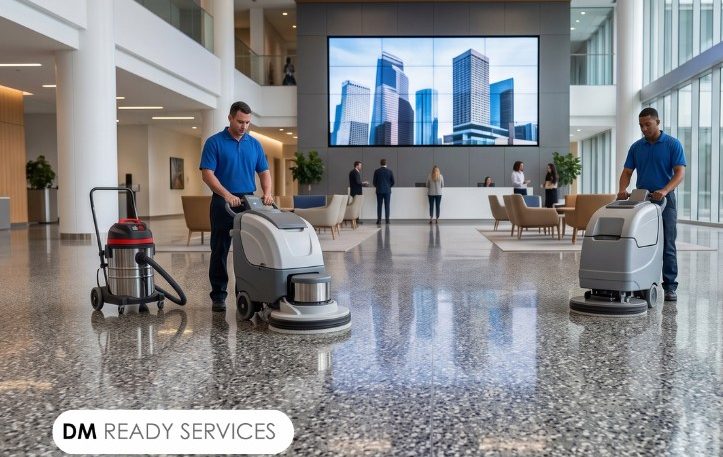
- Removing Marble Scratches: Marble is soft and scratches easily. Technicians use heavy machinery with diamond-grit pads to grind down the stone surface. This process involves honing, which means smoothing the stone to remove scratches and stains. It cuts away a microscopic layer of the damaged stone, exposing a fresh, clean layer underneath.
This method works for large areas like office lobbies, elevator banks, and long corridors. It also works for office breakrooms and executive suites with granite countertops or stone vanities that see heavy daily use.
Should You Choose a High-Gloss or Matte Finish for Your Office?
The choice between a glossy polished surface and a matte finish depends on your building’s design and maintenance goals. Both options look great, but they serve different needs.
- High-Gloss Finish: This gives a mirror-like shine. It looks luxurious and brightens up dark lobbies by reflecting light. However, it shows dust, scuffs, and foot traffic very quickly. It requires more frequent touch-ups in high-traffic areas to keep that bright shine.
- Matte or Honed Finish: This creates a smooth, satin look with low reflection. It hides scratches, scuffs, and dust much better than a high gloss. Many modern office buildings prefer this look because it requires less daily fuss and offers a contemporary feel.
Frequently Asked Questions About Stone Floor Care
How often should commercial stone floors get professional polishing?
Most high-traffic office lobbies need professional polishing every 12 to 18 months. Low-traffic areas like executive boardrooms can go three to five years before needing a full restoration.
What is lippage, and how do you fix it?
Lippage happens when the edges of stone tiles are not perfectly even with each other. This creates an uneven surface and a tripping hazard. Restorers fix this by grinding the high edges down flat using heavy diamond grinding machines until the floor is completely flat.
Can you fix a stone floor that has been damaged by harsh chemicals?
Yes. Acidic cleaners etch stone, leaving dull, white spots. Professional grinding and honing remove the etched layer and restore the uniform look of the natural stone surfaces.
Why is my polished stone floor slippery when dry?
Polished stone is usually not slippery when dry. The shine comes from the smoothness of the stone itself, not from a wax coat. If it feels slippery, it may have a buildup of the wrong cleaning chemicals or dust.
What is a vapor barrier, and does it affect stone floors?
A vapor barrier is a plastic sheet placed under concrete slabs to stop moisture from rising up through the ground. If a building lacks one, moisture can push up through the stone, causing white powder deposits called efflorescence.
Schedule Your Floor Inspection
Keeping your office floors looking their best takes more than a mop and bucket. When daily maintenance stops working, it is time for professional help. DM Ready Services specializes in bringing life back to tired office floors.
Our team focuses on a natural shine philosophy. We do not hide damage under cheap waxes or coatings. Instead, we use advanced diamond grinding and honing to reveal the true beauty of your stone. Protect your building’s image and make your lobby stand out.